
Falcon’s Field
Guide to Modular Permitting Approval
Quick Summary
If a shipping container building requires permitting, it needs both state modular approval for how it's built and local permitting for where it's installed.
This guide explains how those two layers work together, how container construction became formally recognized in U.S. codes, and what typical timelines, costs, and review processes look like.
Take a deeper dive: Understanding Permitting: Shipping Container Buildings Code Compliance

Why Permitting Matters for Container-Based Construction
Permitting ensures that every occupied container structure meets building-code standards for safety, durability, and accessibility. For modular construction, it also guarantees that the modules produced in a factory meet structural and energy-efficiency requirements before installation.
Although the path is now standardized, modular projects in states that have a modular building program must still satisfy two authorities: the state modular program (for the structure itself) and the local building department (for the site).
Here's is a list of states with official modular building programs and their primary oversight agencies. In states that do not have a modular building program, the project must go through the local building department.
What “Permitting” Means for Modular Container Buildings
State approval certifies how the module is built; local approval governs where and how it’s installed. When permitting is necessary, both are required for occupancy. If the state does not have a modular program, the local building department has authority.
How Container Permitting Evolved
Before 2021, shipping containers occupied a regulatory gray area. Most code officials didn’t know how to classify a shipping container. That changed with the development of formal acceptance criteria and new chapters in national codes.
KEY MILESTONES
-
2016
Industry working groups begin defining testing and traceability requirements for repurposed containers.
-
2019
The International Code Council (ICC) publishes Guideline G5, recognizing reused shipping containers as viable building materials.
-
2021
Shipping containers gain placement in International Building Code (IBC) Chapter 31.
-
TODAY
More than 35 states operate modular programs that accept container-based structures.
These updates gave regulators and design professionals a consistent framework for review and approval, taking container-based modular structures from experimental to standard building materials.
How the Modular Permitting Process Works
-
1
Confirm Requirements
Determine which codes, standards, and jurisdictions apply to the project.
-
2
Prepare Plans
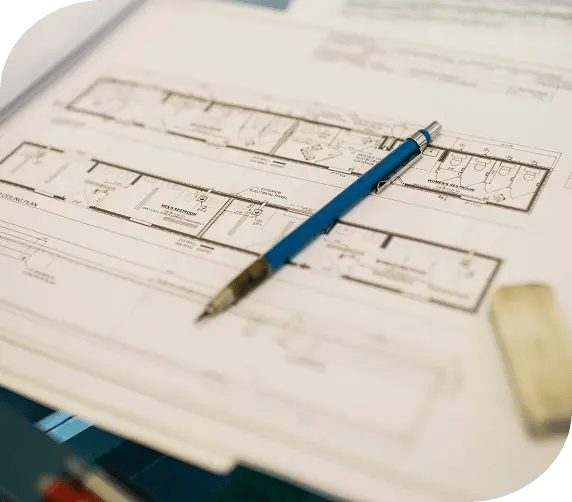
Develop sealed structural, MEP, and energy-compliance drawings.
-
3
Submit for State Review
Send plans through a certified Third-Party Inspection Agency (or state agency, as required) for modular approval.
-
4
Address Reviewer Comments
Respond to any Corrective Action Reports (CARs) until full approval is obtained.
-
5
Coordinate Production & Inspections
State-required inspections are scheduled and completed on-site at the manufacturing facility during production.
-
6
Receive State Insignia
Once approved, each module is inspected and labeled for compliance before leaving the factory.
-
7
Complete Local Site Work
Foundations, utility connections, and other site-specific elements must then be approved locally.
Get the full walkthrough: Key Permitting Steps for Shipping Container Buildings
Distinguishing State and Local Roles
Strong communication prevents duplication and delays.
Understand how state and local authorities interact: State vs. Local: Who Really Has Jurisdiction Over Your Container Project?
Find out about factory certification and insignia labeling: The Secret Power of State Certification for Container-Based Modular Buildings
Technical Foundations of Container Code Compliance
Ensuring your design and engineering teams understand these standards can prevent over-design and reduce resubmissions.
Typical Permitting Timelines
Most modular reviews fall between 6 and 16 weeks depending on state workload and project complexity. Variables include:
- Reviewer backlog and staffing
- Completeness of submittals
- Complexity of MEP (mechanical, electrical and plumbing) and energy design
- Parallel or sequential review of state and local permits
Simple single-module structures can clear review in about six weeks; large multi-unit projects may extend several months.
Understanding Permitting Costs
Just as timelines span ranges, costs vary with project type and jurisdiction, but most modular permitting budgets include:
- Engineering and design documentation
- Third-party review fees
- State insignia fees
- Local permit applications and inspections
Industry data suggest permitting typically accounts for 20–30% of total project cost. Budgeting early for these requirements can help prevent delays and surprises.
Hidden expenses such as redesigns, idle time, or missed approvals often outweigh initial fees.
Common Pitfalls in Container Permitting
Why State Certification Matters
Certified modular factories operate under continuous state oversight. Their processes are documented in a Quality System Manual (QSM), audited regularly, and verified by Third-Party Inspection Agencies.
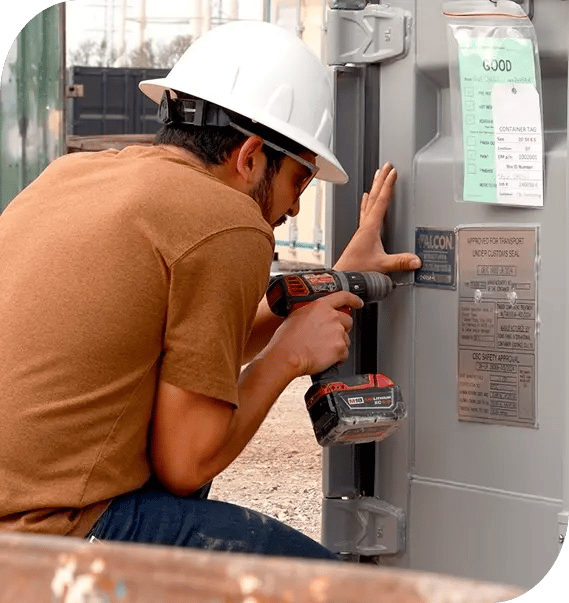
Each approved module leaves the factory with a state insignia, proving that code compliance has already been verified before shipment. This system streamlines approvals and builds consistency across projects and jurisdictions.
FAQs About Container Permitting
Do shipping container buildings need a permit?
Sometimes — but not always. Unoccupied, temporary, or remote installations outside city or county oversight often don’t require permits. Requirements depend on where the structure is placed and how it’s used. To be sure, check with your local AHJ to confirm if your project needs a permit and what criteria apply.
See: Key Permitting Steps for Shipping Container Buildings
What is the difference between state modular approval and local permitting?
State modular programs oversee construction quality, materials, and factory inspections. Local building departments (the Authority Having Jurisdiction, or AHJ) handle zoning, site work, and occupancy. Both approvals are required for legal operation.
See: State vs. Local: Who Really Has Jurisdiction Over Your Container Project
How long does it take to get a container building permit?
Most modular reviews take 6 to 16 weeks, depending on the state’s review process, the complexity of the structure, and whether a certified Third-Party Inspection Agency is involved. States that use independent reviewers typically move faster than those with internal backlogs.
See: How Long Does Container Permitting Really Take? A Realistic Timeline
How much does container permitting cost?
Permitting usually represents 20–30% of the total project cost, including engineering, plan reviews, and inspection fees. The largest cost variables are design complexity and how many times plans must be resubmitted for corrections.
See: Permitting Costs Explained (And the Hidden Costs of DIY)
What documents are required for approval?
A typical submittal package includes:
- Structural, mechanical, electrical, and plumbing drawings
- Energy-compliance reports (ComCheck)
- Engineering seals
- Factory certification records and quality-control documentation
See: Shipping Container Permitting Terminology
Who reviews and inspects modular container projects?
It depends on the state where the structure will be located. Sometimes Third-Party Inspection Agencies (TPIAs) review design documents and perform factory inspections, other times the state does it, and sometimes both are involved. Local inspectors handle the foundation, utilities, and final occupancy checks on site.
What is AC462 and why does it matter?
AC462 is the ICC acceptance criteria that proves reused shipping containers meet the structural and material standards required for building use. But not every seller can provide AC462-certified containers. Approval requires strict quality controls, inspections, and material expertise.
If your container project needs a permit, AC462-certified containers are required.
See: Understanding Permitting: Shipping Container Buildings Code Compliance
Can state modular approval replace local permits?
Not entirely. State modular approval verifies that the building module meets code, and in most states local AHJs accept that approval. However, local jurisdictions still control site-related requirements such as installation, utilities, and occupancy. In some home-rule areas, local authorities may even supersede the state and require their own review.
See: State vs. Local: Who Really Has Jurisdiction Over Your Container Project?
What causes most delays in container permitting?
Common causes include incomplete documentation, engineering that doesn’t reflect container-specific standards, missing state certifications, and misalignment between state and local reviews. Early coordination and experience with modular codes are key to avoiding delays.
See: When Good Engineers Over-Engineer: How to Keep Your Container Project Buildable
What happens if a project skips permitting?
Building without proper required approval can result in stop-work orders, daily fines, or denied occupancy. In some jurisdictions, unpermitted structures must be removed or rebuilt to meet code. Permitting is the safeguard that prevents these outcomes.
See: Permitting Costs Explained (And the Hidden Costs of DIY)