



GETTING STARTED
Why choose a shipping container over a traditional building?
A shipping container is an inherently cost-effective, strong, and secure solution for functional, mobile space — even before modifying it at any level. No other structure can meet that criteria. For more details, read: 7 Reasons Repurposed Shipping Containers Make Sense.

What can shipping containers be used for?
Shipping containers can be utilized for commercial, industrial, housing, and institutional applications. Uses include storage space, office space, bathrooms, locker rooms, industrial enclosures, workforce housing, and more. Explore our product catalogs to learn more.
Where do Falcon’s shipping containers come from?
Falcon has a sophisticated supply chain that enables us to obtain the best containers from all over the world.
What types of shipping containers does Falcon use?
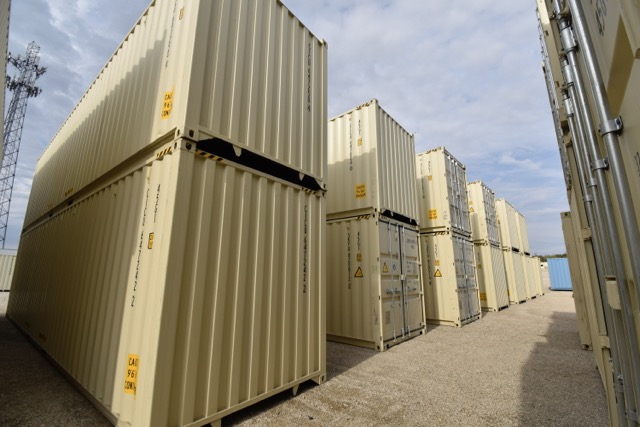
We repurpose used shipping containers. Many of our containers have only been used once and are in “like new” condition.

How does Falcon ensure container quality before work begins?
When containers arrive at our facility, we ensure they meet our strict criteria for quality prior to beginning any work.
Does Falcon sell to individuals or only to businesses?
We only sell to small businesses, large corporations, and government entities.

PLANNING & DESIGN
How do I order a custom container structure?
Falcon offers pre-built quick-ship structures and pre-designed floor plans ready to order at scale. We can also work with you to modify existing floor plans or start from scratch.
What pre-designed floor plans does Falcon offer?
We have existing floor plans for many different applications, including workspaces, living spaces, bathrooms, locker rooms, storage, and more. Browse Falcon floor plans.
Can I add custom windows or doors to my container?
Yes. Please consult with the Falcon team on cost and specifications.
What types of windows work best for container structures?
The ideal window depends entirely on the intended purpose of the structure. Consider which options are available before designing. Keep in mind that any window larger than 3 feet by 3 feet will likely need structural reinforcement. See all shipping container modification options.
What is a shipping container window frame?
Our production team uses internal systems to standardize each cut and framed opening. These window frames are made to fit windows of varying sizes and allow for quick installation of the desired window.
What’s the difference between roll-up doors and cargo doors?
Roll-up doors lift from the bottom and roll up inside the container. They are lockable, easily unlatched, and lightweight, and can be installed along side walls or at the ends. Roll-up doors come in different grades, and lower-grade doors wear out faster with frequent use. Cargo doors are heavy-duty, weather-tight swinging doors that use a cam and lock system for security against theft and environmental threats. Read more: 6 types of shipping container doors and when to use each.
How secure are shipping container doors?
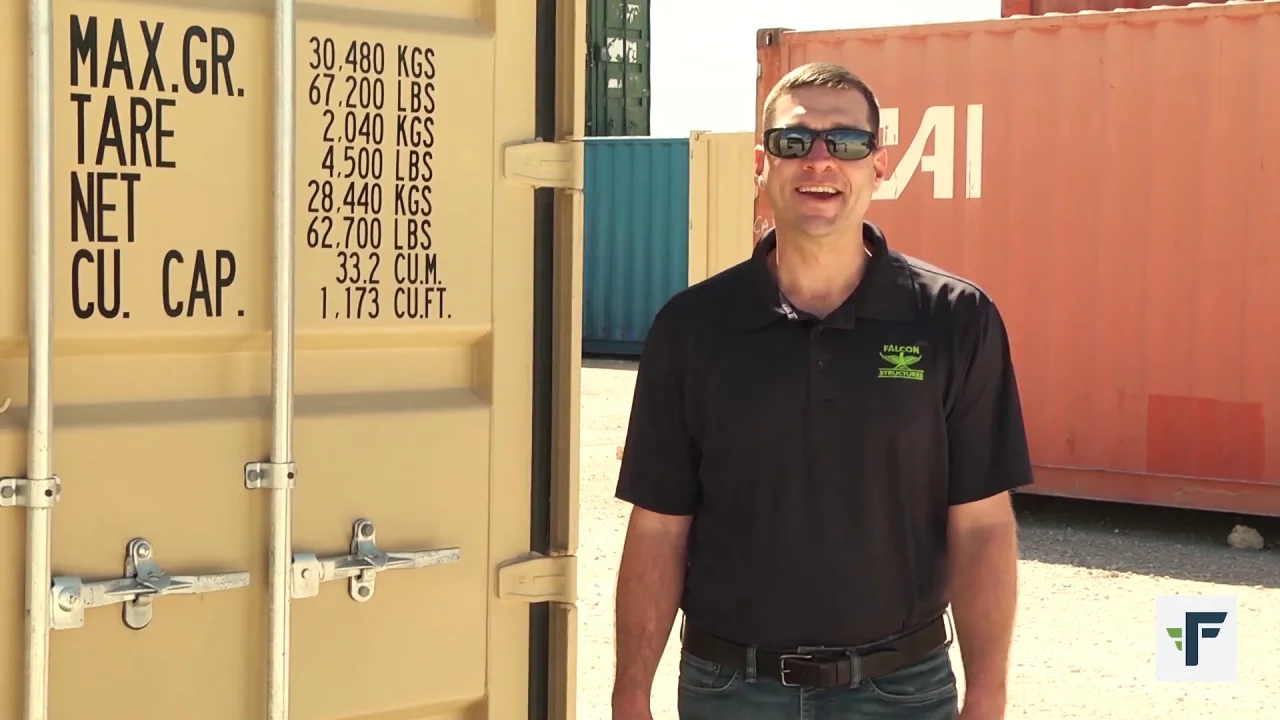
Shipping container cargo doors are heavy-duty, weather-tight, and secure. Companies across the world trust containers to ship valuable goods over turbulent seas. As containers are repurposed, cargo doors often receive security-enhancing modifications such as additional locks.
What’s the best lock for securing a shipping container?
Cargo doors are often modified to include lock boxes to deter thieves. We can customize a lock box and weld it to the cargo door to protect the lock from bolt cutters and other theft devices. These boxes include lock tabs welded inside to increase security and reduce vulnerability.

Can the full sidewall of a container be removed?
Yes, however, the steel in the wall is integral to its strength. If the wall is cut out, it must be reinforced with steel to maintain its shape and sturdiness. Contact us to discuss this before proceeding.
Can I add a fold-up awning or opening side wall to my container?
Containers with upward-folding awnings are typically not ISO containers — they are fabricated from scratch to handle the structural load of the awning. Because Falcon exclusively repurposes existing shipping containers, we do not create fold-up awnings for safety reasons. For fully opening sides, we can offer a container built with sidewall doors.
What interior wall panel options are available for container structures?
Sanded wood paneling or drywall are great options for companies that frequently relocate their offices and living spaces. PVC wall paneling is durable, easy to clean, and moisture-resistant — ideal for container bathrooms. Aluminum and perforated steel wall interiors are also available. See all interior finish options: Container modification options.
What is the floor of a shipping container made of?
A shipping container’s floor is constructed of marine-grade plywood or bamboo. Marine-grade means the wood has more layers than traditional construction plywood, making a more stable floor that’s less prone to warping. For more on flooring: 5 shipping container floor options.

How thick is a shipping container floor?
A shipping container floor is 1.1 inches (28 millimeters) thick, constructed with steel cross-member beams lying roughly 12 inches apart, with panels of plywood or bamboo screwed on top.
Are shipping container floors waterproof?
Shipping container floors are water resistant. If water resistance is particularly important, we recommend covering the original flooring with epoxy or installing coin vinyl or other water-resistant flooring options. Read more: Shipping container floor options and waterproofing.
Can I add high-end finishes like granite countertops to my container structure?
Many customer-specified interior products or finishes can be accommodated. Often, however, we recommend alternative materials or self-installation once the structure is delivered.
Can my container run on solar or off-grid power?
Self-contained configurations are possible depending on the project requirements. We have worked with solar-powered applications in the past; however, our units are most commonly designed to connect to on-site utilities, especially for plumbing and wastewater services. Because utility needs can vary by application, we recommend a consultation to review power, water, and usage requirements before finalizing the design. For additional information on solar applications, please see our solar power blog entry.
Does Falcon provide furniture or built-ins for container interiors?
For loose furniture, we recommend self-selection and self-installation. We do offer cabinets, work surfaces, and shelves that are secured to the interior walls. Explore living space options: Falcon container housing and living spaces.

Does Falcon build custom container homes?
We currently offer pre-designed living space floor plans rather than fully custom residential container homes. Our units are designed for flexible commercial, temporary, workforce, and specialty living applications, but they are not intended for permanent residential use in the traditional custom home market. If you have a specific application in mind, we are happy to discuss your needs and determine whether one of our existing designs may be a good fit.
What is a clear span container building?
When shipping containers are placed side by side and the side walls are removed to create a larger room, it’s called a clear span. Interior columns and beams maintain the structural integrity of the structure.
How are shipping containers connected in multi-unit structures?
Containers are typically bolted together using special container connectors called bridge fittings, or they can be welded together in a permanent installation. Work is also done on the interior to ensure structural integrity.

How many shipping containers can be stacked?
Shipping containers were designed to be stacked nine high in ports and on cargo ships. For repurposed structures, containers can also stack into multiple stories.
How much do 20-foot and 40-foot containers weigh?
An empty 20-foot shipping container weighs between 3,970 and 4,850 lbs. An empty 40-foot shipping container weighs between 8,340 and 9,260 lbs. Weight increases with the addition of insulation, drywall, HVAC units, and other modifications.
Can a shipping container be cut to a custom length?
While it is possible to cut a shipping container, the stability of the structure comes from the four corners. If cut, we would either weld an end cap back on to the open end or create structural reinforcements to ensure safety and stability. This technique is useful for projects with requirements outside standard 10-foot, 20-foot, and 40-foot sizes.

PERMITTING & COMPLIANCE
What building codes apply to shipping container structures?
All structures are subject to the building codes and permits of the local Authority Having Jurisdiction (AHJ). Requirements vary depending on the size and use of your project and whether it’s temporary or permanent. Visit Falcon’s permitting page for more details.

When are stairs required for OSHA compliance in container buildings?
Single, mobile container buildings — such as ground-level offices — do not need stairs to be OSHA compliant. As office structures expand, this may change. If you request a larger OSHA-compliant container structure, Falcon will prepare it accordingly.
Do shipping container buildings require a permit?
Permitting requirements depend on where the structure is placed and how it’s used. Check with your local Authority Having Jurisdiction (AHJ) to confirm your project’s permitting requirements. For details on your project: Falcon’s permitting guide.
How long does shipping container permitting take?
Most modular reviews take 6 to 16 weeks, depending on the state’s review process, the complexity of the structure, and whether a certified Third-Party Inspection Agency (TPIA) is involved. Simple single-module structures can clear review in as few as six weeks; large multi-unit projects may extend several months. States that use independent reviewers typically move faster than those with internal backlogs. Full permitting guide: Falcon’s guide to container permitting.

ORDER & DELIVERY
What site prep is needed before container delivery?
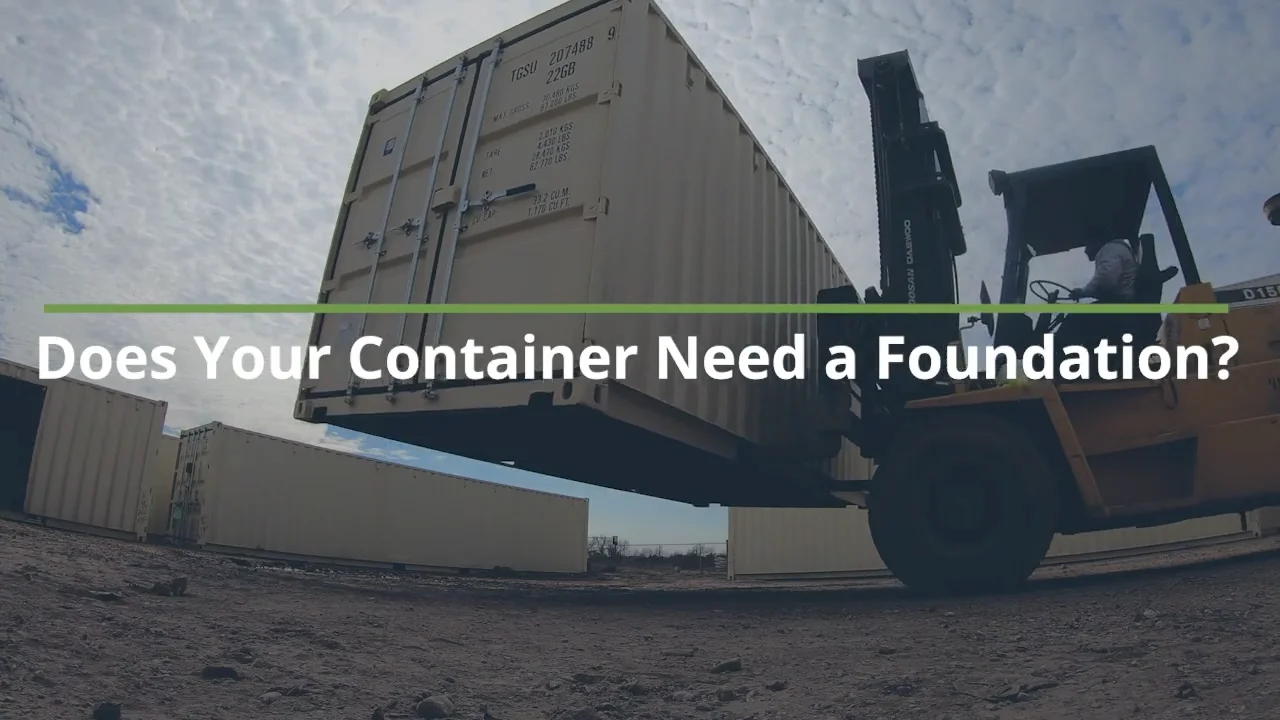
Site preparation requirements can vary depending on how the container will be used and how long it will remain in place. For short-term or frequently relocated applications, a compacted gravel foundation may be sufficient for leveling and support. However, for long-term installations, we recommend placing the container on a hard, level surface — ideally a concrete slab — to provide the best long-term stability, comfort, and functionality.
Depending on the unit configuration, connections to on-site power, water, and waste utilities may also be required. Additional items such as steps, ramps, tie-downs, skirting, or foundations may be recommended based on the site conditions and intended use.
How does Falcon’s ordering process work?
A quick consultation allows us to understand your needs, after which we provide a quote for your approval. Before production, you’ll receive and approve drawings to ensure the container is produced to your specifications.

How long does it take to receive my container after ordering?
Timelines depend on project complexity. In-stock containers can be shipped within days. Pre-engineered designs typically deliver in a few weeks. Customized or custom-design timelines are quoted per project.
Does Falcon arrange delivery of container structures?
Yes. Falcon can arrange delivery of your shipping container structure. Contact us for a quote and arrangements based on your exact delivery location.
How is a shipping container loaded and transported?
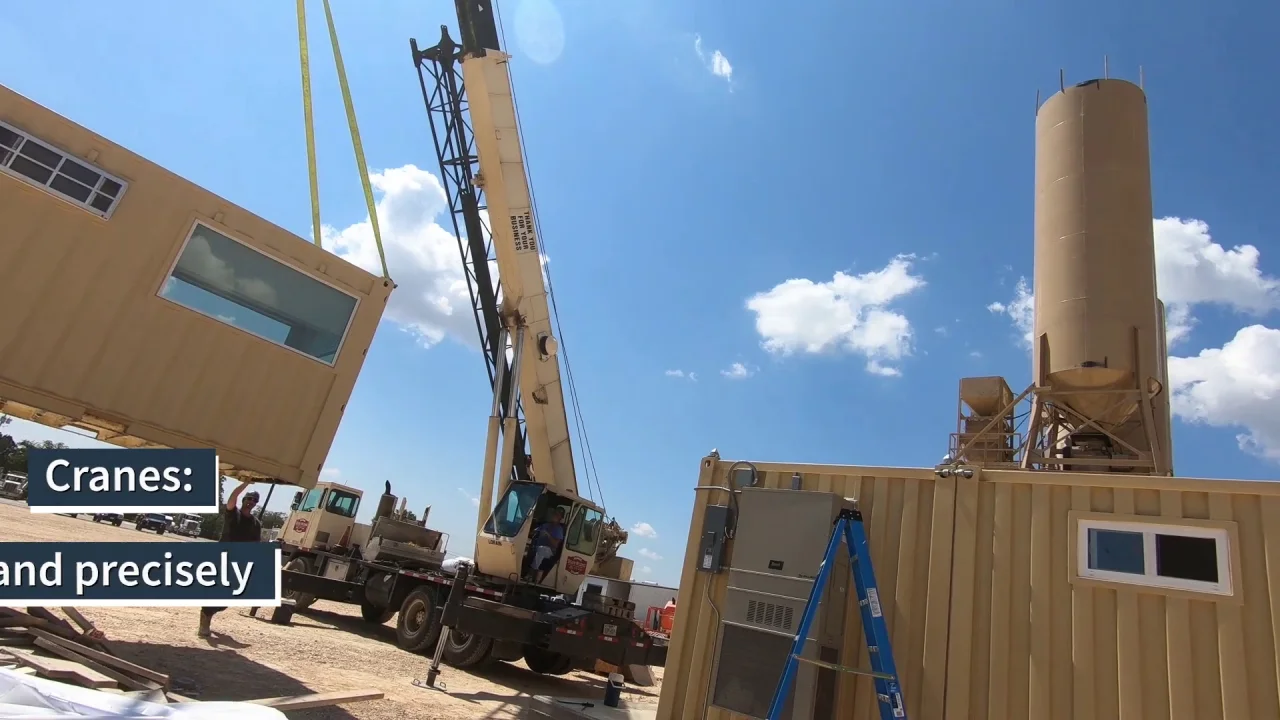
A crane or forklift is needed to move a container on or off a trailer. The right equipment depends on what’s available at your location and conditions where the container will be placed.
Are volume pricing discounts available?
Falcon prides itself on operational efficiency and fair pricing for all customers. If an order positively impacts our ability to purchase raw materials from suppliers, those savings are passed through to the customer.
Can I get architectural or CAD drawings of my container before production?
Falcon provides Shop Drawings for customer approval prior to beginning any work. Because variations exist between container manufacturers in corrugation patterns, construction techniques, and exact sizing, broader architectural models beyond Shop Drawings are not available.
What are Falcon’s standard terms and conditions?

INSTALLATION, USE & MAINTENANCE
How do I connect electrical and plumbing to my container?
Electrical and plumbing can be connected through external portals on the container by a licensed electrician or plumber. The electrical connection involves high voltage — always hire a licensed electrician to safely connect the container to power.
Can I expand my container structure over time?
Yes. The modular nature of container construction is one of its key benefits, allowing for phase installation as needs grow.
What insulation options are available for shipping containers?
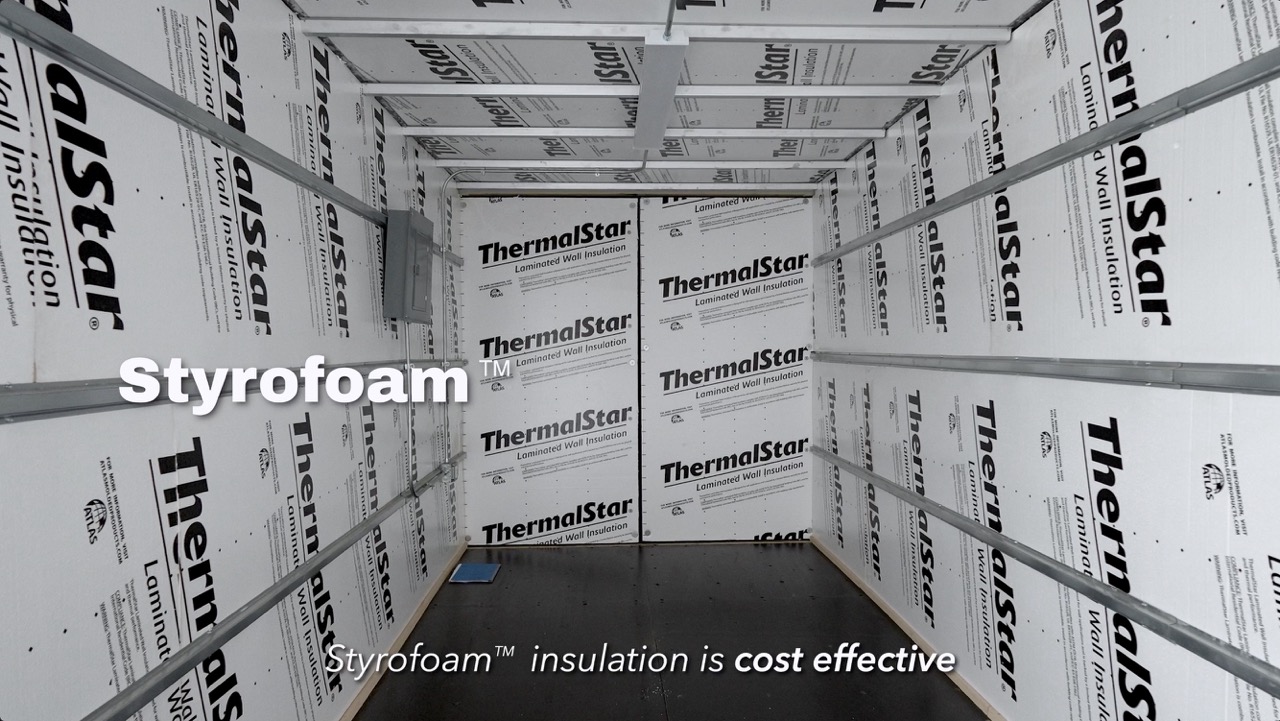
The right insulation depends on your site climate and intended use. Styrofoam insulation is ideal for storage containers. Batt insulation works well for offices and living spaces. Spray foam offers a fully climate-controlled environment for temperature-sensitive equipment storage. Read more: How to insulate a shipping container.
Do shipping containers get hot inside?
Since containers are made of steel, they can get very hot inside when unmodified and sitting in direct sun. The internal temperature becomes manageable with added insulation and air conditioning units.
How are shelves installed inside a shipping container?
Shelves must be welded or bolted to the walls depending on the interior finish. For unmodified steel walls, screw or bolt directly to the steel. Falcon can install shelves before delivery so they stay in place during future relocations.
What kind of paint should be used on shipping containers?
A hard, shiny alkyd enamel paint works well for most containers. A waterborne coating system is equally effective and more environmentally friendly. Use matte acrylic paint as a base for murals. Industrial applications may call for polyurethane paints.