

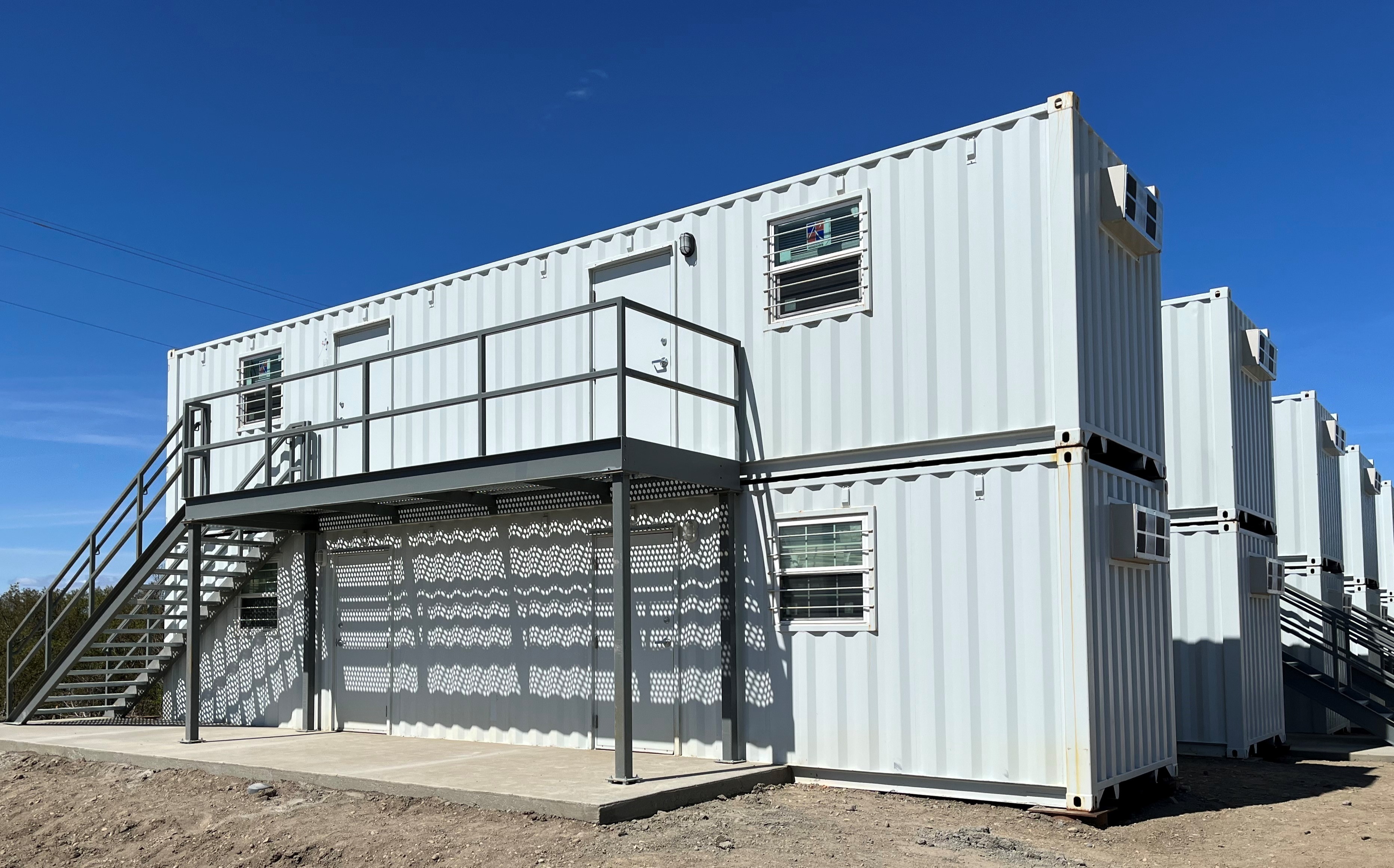

Living Space Containers
20’ & 40’ SIZES • COMFORTABLE LIVING QUARTERS • INDUSTRIAL-GRADE DURABILITY
LOOKING TO CUSTOMIZE THESE FLOOR PLANS?
You’ve got it! Falcon offers an extensive library of modification options for you to choose from. Here are some of the most popular modifications used for living space containers.
More About Modification Options
Container Living Quarters Vs. Traditional Workforce Housing
Container-based living spaces offer superior durability, mobility, and climate control compared to temporary bunkhouses or lightweight portable shelters. Built from steel shipping containers, these units deliver safe, comfortable accommodations for workers stationed in remote or industrial environments.
All-steel construction built for rugged jobsite conditions
Climate-controlled interiors for year-round comfort
Configurable layouts for single or multi-occupancy
Portable for redeployment between projects
Long-lasting, low-maintenance structures
Designed for remote operations and workforce well-being
Lightweight construction with shorter service life
Minimal insulation and less reliable temperature control
Limited privacy and fewer layout options
Less secure in harsh weather or remote settings
Often unsuitable for extended-stay workforce operations
Delivery & Permitting
These floor plans come from our extensive design library and are some of the most common layouts for a modified container repurposed for living spaces.
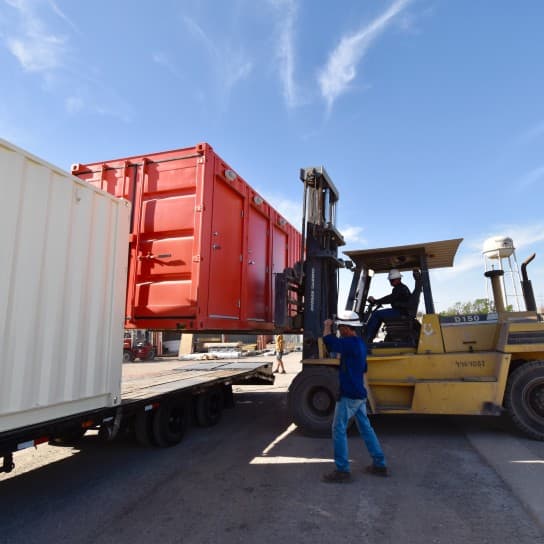
Falcon coordinates nationwide delivery using vetted, insured drivers and a range of transport options, including tilt-bed trucks, flatbeds, and step-decks, to ensure your modified container arrives safely and on schedule. We’ll guide you through every step so delivery day is predictable and straightforward.
Site readiness
Before delivery, your placement area should be flat, level, and compacted so the doors open smoothly and utilities drain correctly. A concrete slab, gravel pad, or other hard, level surface works well. Containers must be placed with all four corner castings supported, and the ground should allow enough clearance for safe maneuvering of the delivery truck or crane if necessary.
Access & placement
Your driver will need a clear path from the street to the final location, with adequate width for turning and enough overhead clearance for the truck and container. If a crane or forklift is required for placement (common with flatbed or step-deck deliveries), Falcon will advise you during scheduling.
Utility preparation
If your unit includes electrical or plumbing:
- Electrical service should match your container’s required 208V/220V power and be installed by a licensed electrician. All units must be properly grounded with a 6-foot grounding rod.
- Plumbing connections require a licensed plumber and typically involve a ¾-inch water inlet and a 3-inch black-water drainage line.
We’ll provide shop drawings and connection details so your local contractors can prepare before the unit arrives.
Depending on your location and intended use, container-based structures may require building, electrical, mechanical, or other necessary permits. Falcon helps simplify this process by providing the documentation and support your local authority will expect.
What we provide
- Stamped engineered drawings and structural details
- Mechanical, electrical, and plumbing (MEP) documentation
- Guidance on applicable building codes and use classifications
- Support coordinating submittals with your local permitting office
Because requirements vary widely by jurisdiction, from temporary use permits to full foundation inspections, we help you understand what’s needed early, reducing delays and keeping your project on track.

FAQs
Who are container living spaces designed for?
Falcon’s living containers are engineered for organizations needing durable onsite workforce housing—not private residential use. They support teams stationed in remote, industrial, energy, or seasonal operations.
What amenities are included in a living container?
Layouts typically include climate control, insulation, sleeping space, storage, lighting, electrical outlets, and a private bathroom. Options vary by floor plan.
Can living containers be used for long-term stays?
Yes. Modified shipping container living quarters are built for extended occupancy and can be configured to meet comfort and safety expectations for long-term projects.
Are container living spaces relocatable?
Yes. Their steel construction and integrated lifting points allow them to be transported and redeployed as job requirements change.
Ready to get Started?
Contact our team for a detailed quote, customization options, and guidance on selecting the right living space container for your operation.