Find and Address the Gaps Between Quoted Price and Deployed Cost
Send this to the colleague who’s been quoted a unit price and is about to treat that number as the budget. It’s the Field Note we’d want them to read before the P.O. goes out.
The Short Version
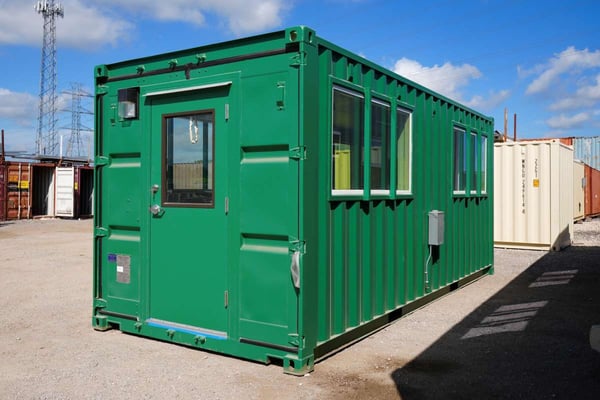
A quote tells you what the structure costs to build and deliver to a staging point. Deployed cost tells you what it costs to put that structure into service at your site — the one with real access constraints, setup requirements, site conditions , and a deadline.
The gap between those two numbers is where most budget surprises live.
On multi-year deployments, deployed cost commonly runs 20 – 30% above quoted price, depending on site complexity, environmental conditions, and how much customization the project really needs. On short rentals, the gap is smaller, but it’s still there.
The categories most often underscoped:
- Delivery, transport, and heavy-haul logistics
- Site preparation and foundation work
- Utility connections — electrical, plumbing, HVAC, data
- Permitting, inspections, and jurisdictional review
-
Specialized configuration required to meet operational needs
-
Installation, commissioning, and final setup
Helpful links:
The Moment the Quote Takes Over the Conversation
It happens a lot. A quote lands, the number gets shared around, and within a day or two everything else is being evaluated against it.
That’s understandable. The quoted number is concrete, and it’s easy to compare. But it reflects what the structure costs to build and deliver to a staging point — not what it costs to put into service at your site, under your conditions, for your timeline.
Understanding what sits between those two numbers is worth the effort. Especially before any budget gets committed.
What the Quote Usually Covers
A standard manufacturer quote generally accounts for:
- Structural frame and shell
- Base insulation
- Standard electrical package
- HVAC unit
- Standard doors and windows
- Basic interior finishes
- Manufacturer configuration
It also assumes your site is uncomplicated: reasonable access, standard delivery, no unusual environmental exposure, no permitting complications, no customization beyond base spec.
Most real jobsites are not uncomplicated.
What Tends to Sit Outside the Initial Quote
These categories show up across projects, even when the specific figures change by site, region, and structure type.
Delivery & Logistics
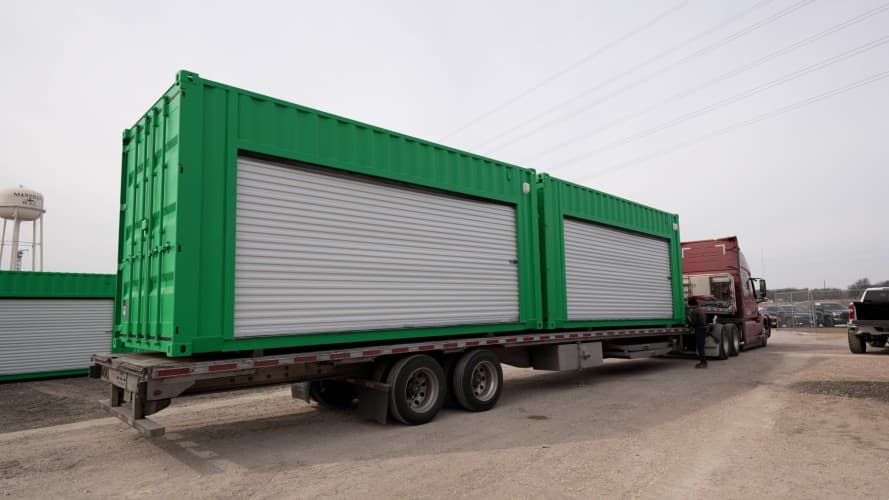
Transporting a portable structure is rarely a standard freight shipment. Depending on the site and the unit, you may be looking at:
- Heavy-haul transport requirements
- Oversize-load permits
- Remote access roads or unpaved routes
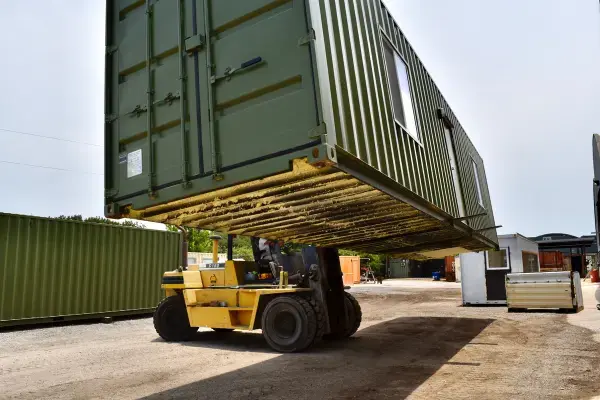
- Crane or specialized lift equipment at origin and destination
- Staging coordination and scheduling
- Multiple mobilizations if the structure will be relocated later
Distance is only one factor. Site access, delivery scheduling, and equipment availability all land in the final logistics number — and every redeployment puts those variables back in play.
Site Preparation
Your structure needs somewhere level, stable, and accessible to land. That usually means more prep work than teams plan for at the quote stage:
- Gravel pads or concrete piers
- Blocking and leveling systems
- Soil stabilization
- Access road improvement
- Erosion control
Skimping on site prep may look like a budget win on day one. But it multiplies cost over the next few years. Doors that don’t seal, water that tracks in, chronic stress on the frame, accelerated wear at the floor — they all trace back to a rushed setup.
Utility Connections
The quote doesn’t include hooking your structure up to the power, water, and data your team actually needs to work. Depending on the site:
- Electrical service connection and panel
- Generator systems at remote sites
- Water connection or storage
- Sewer tie-in or containment
- Data and communications
At a well-serviced site, utility hookup is fairly routine. At a remote site, the picture changes fast: generator systems, water storage, specialized electrical configurations, and scheduling across multiple trades. This is the category most consistently underestimated in early budgets.
Permitting & Jurisdictional Review
“Temporary” doesn’t mean “simple permit.” Requirements move around significantly by jurisdiction, sometimes county to county:
- Engineering review and stamped drawings
- Wind- or snow-load documentation
- Fire safety compliance
- ADA considerations
- Occupancy classification
- Inspection fees
A permit that takes two weeks in one place can take two months in another. Timeline risk is budget risk — permitting delays push schedules, which push trades, which push everything downstream. We see this fairly often on projects that got a fast-track schedule built around an optimistic permitting assumption.
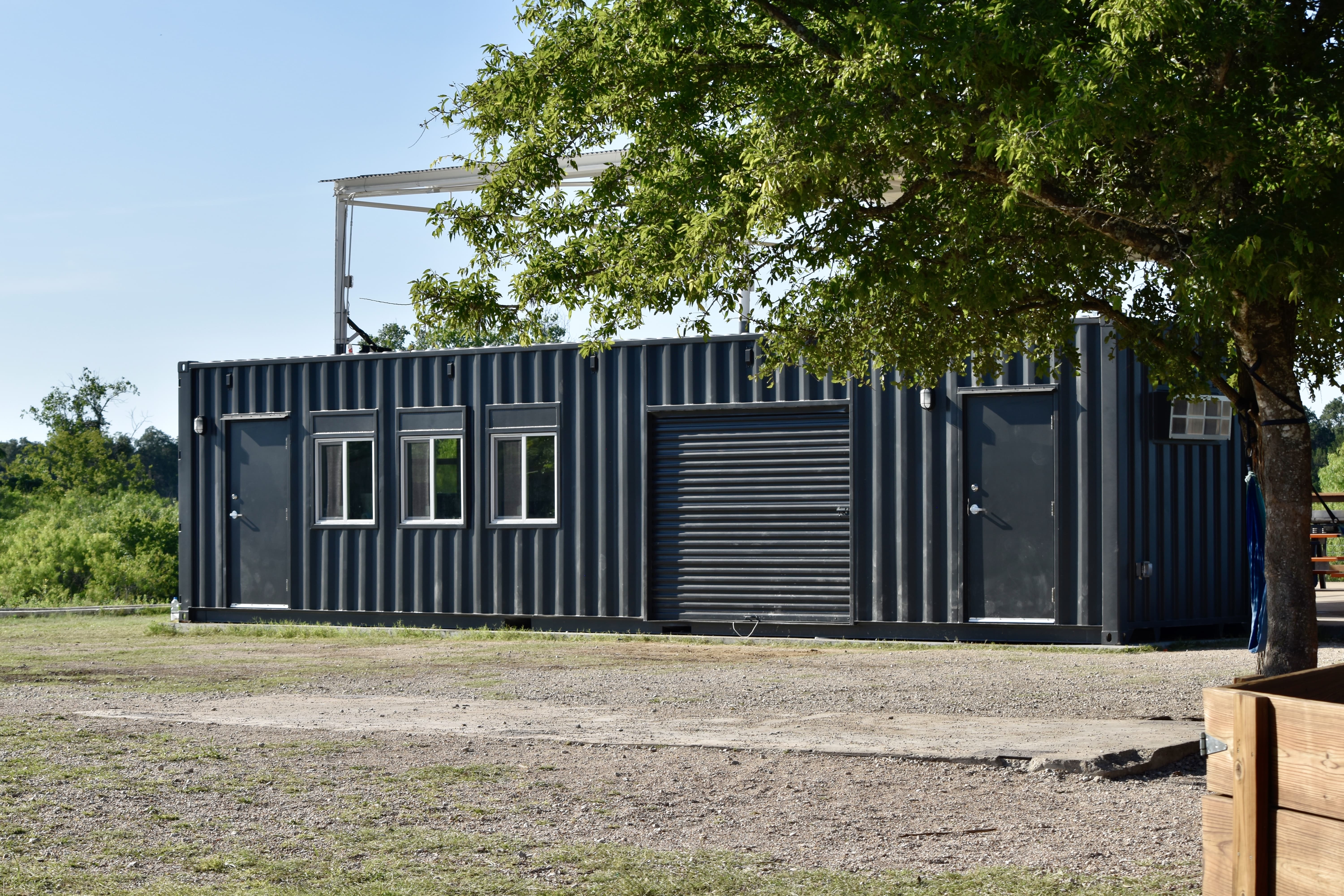
Customization Beyond Base Spec
What looks optional in a quote is often operationally necessary once the full site and use case come into focus. The things that commonly get added after the first quote:
- Integrated restrooms
- Upgraded HVAC for extreme climates
- Enhanced insulation
- Heavy-duty security hardware
- Reinforced flooring for equipment loads
- Acoustic treatment
- Equipment integration
Identified early, customization is within scope. Identified after a number has been shared with leadership, it’s budget friction at the worst possible moment. The earlier the scoping conversation, the less painful the add-ons.
Installation & Final Setup
Setting the unit involves crane placement, final utility connections, inspections, and commissioning. Things that consistently introduce delay: incomplete site readiness, trade scheduling gaps, and inspection backlogs.
Manufacturing Timelines & Schedule Risk
Manufacturer reliability affects deployment cost too. Delays at the fabrication stage don’t stay contained to the factory schedule — they cascade into rescheduled trades, idle site-prep work, shifting crane windows, and operational delays downstream. In practice, schedule predictability has economic value of its own.
The time between delivery and operational status is a real cost. On projects where the structure unlocks other work, every day of setup delay has downstream effects across the whole schedule.
How Site Conditions Change the Math
Environmental conditions rarely push just one cost category. They drive multiple up at once:
- High wind exposure — structural requirements, engineered drawings, additional certification
- Heavy snow loads — roof-load documentation, added permitting review
- Extreme heat — HVAC upgrades, insulation requirements
- Coastal or industrial corrosion — protective coatings, hardware upgrades
- Remote or unpaved access — heavy-haul complexity, staging, vendor availability
The same structure that costs one thing to deploy in mild suburban conditions costs something quite different at a mining site, a coastal build, or a remote industrial facility. The tougher and more remote the site, the wider the gap between quoted price and deployed cost.
In a Texas summer, HVAC systems work harder, and that shows up faster than many teams expect. In a coastal deployment, corrosion hits the hardware before it hits the structure. On a remote site, even a small repair turns into a day-long trip. None of that shows up on a quote.
LEARN MORE: Explore Container Workspace Options
Build a Complete TCO Picture Before You Commit
You don’t need exact figures at the planning stage. You need visibility into the categories that move the total — before the quoted number becomes the anchor for every later decision. A few questions tend to open that picture up:
- What do delivery logistics look like for this specific site?
- What site preparation is actually required — not just assumed?
- What utilities are available, and what has to be built out?
- What does permitting realistically look like in this jurisdiction?
- What customizations are operationally necessary, not just nice to have?
- What are the installation steps — and the likely delay points?
- What environmental factors are specific to this site?
Early scoping keeps the budget conversation grounded. It also prevents the category of surprise that tends to show up two months into a deployment, when the fix is expensive and the project is already counting on the structure.
Questions worth asking before you sign a quote: Is this the price to get the structure built, or get it to the site? What’s assumed about my site conditions? What’s not in scope that I should be budgeting separately?
Frequently Asked Questions
What’s the difference between quoted price and deployed cost?
Quoted price is what you’re charged for the unit itself built to a staging point under standard conditions. Deployed cost is what it takes to put that unit into service at your specific site — including logistics, site prep, utilities, permitting, and customization. Deployed cost is consistently higher than quoted price.
Does site preparation really affect long-term cost?
Yes, and more than most teams expect. Poor site prep tends to accelerate wear in ways that aren’t obvious day one — misalignment, water intrusion, structural stress, faster maintenance cycles. Low-quality site preparation is a cost multiplier that plays out over years.
What site conditions drive up deployment cost the most?
Remote access, harsh environmental exposure, and complex jurisdictional review each tend to push multiple cost categories at once. A remote, high-wind or coastal site with strict permitting will consistently produce the widest gap between quoted price and deployed cost.
The Bottom Line
The quoted price answers one question well: what does this structure cost to build? Deployment scoping answers a more useful one: what will it actually cost to put into service?
Before committing to any portable structure — rental or purchase, short-term or long-term — it’s worth walking through the full deployment picture. The gap doesn’t have to be a hidden cost. You can see it coming. And the longer the deployment, the more important it is to see it clearly from the start.
Download the Free TCO Checklist
Use this comprehensive checklist to surface the hidden variables in your acquisition, operation, and exit phases before you commit.