



Redeployment, Residual Value, and Why End of Deployment Deserves Early Consideration
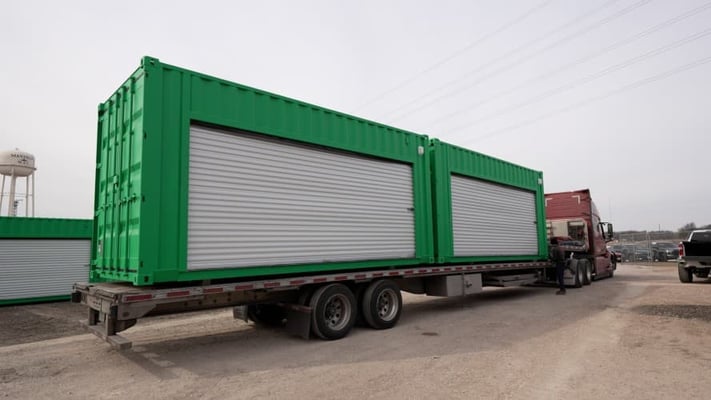
Variables That Differentiate Long-term Cost Are Set by Early Decisions
Send this to the colleague who’s about to sign a multi-year arrangement and hasn’t yet talked about what happens when the project ends. It’s the Field Note we’d want them to read while the decision is still an open question.
The Short Version
Most portable structure decisions get evaluated at acquisition. The variables that most differentiate long-term cost often don’t show up until much later — when the structure is redeployed, resold, or retired.
By the time they show up, most of those outcomes are already set. The structure type you picked. How you maintained it. What site conditions it lived in. Whether you planned for reuse. All of those inform what you can recover at the end.
Cost categories most often underscoped at the planning stage
- Transportation and heavy-haul costs for redeployment
- Destination site preparation
- Utility disconnection and reconnection
- Downtime and operational disruption during moves
- Structural wear from repeated relocations
- Residual or resale value at retirement
- Depreciation and tax treatment over the holding period
- Decommissioning, removal, or storage
The difference between a sunk cost and a reusable asset is mostly decided by what you planned for upfront.
Why Retirement & Resale Belong at the Start of the Analysis
In most cost discussions, residual value gets bolted on at the end — an afterthought, once acquisition and deployment have already been figured out. We don’t recommend that sequence.
Residual value is an input, not a footnote. A modest shift in what you expect to recover at retirement can change the annualized cost picture, the rent-vs.-own comparison, and the break-even timeline on a capital investment.
“Portable” describes capability, not cost. The ability to move a structure doesn’t include what it takes to disconnect it, transport it, set it, reconnect it, and absorb the disruption in between. In many mobile-office fleets, refurbishment between deployments becomes a recurring maintenance event of its own: repairing travel wear, refreshing interiors, addressing cosmetic degradation, and getting the unit ready for the next site.
Every move is a financial event, an operational event, a structural stress event, and sometimes a risk event. Each of those has a cost.
Redeployment cost is predictable. You just have to look at it early enough.
Understand Logistics & Delivery
What a Redeployment Actually Costs
A relocation is more than putting a unit on a truck, and it’s worth walking through the full picture.
Transportation and Handling
Depending on the structure and the route, you may be looking at:
- Heavy-haul equipment
- Oversize permits and escort vehicles in some jurisdictions
- Route planning and access analysis
- Crane lifts at origin and destination
- Staging coordination
Distance is only one variable. Site access, terrain, crane availability, and scheduling complexity all drive cost. Every redeployment puts those variables back in play.
Destination Site Preparation
A structure can’t arrive at an unprepared site. The receiving location needs stable, level ground, an appropriate foundation, adequate drainage, and equipment access. When site readiness lags transport scheduling, the cost climbs fast — idle equipment time, rescheduled crane lifts, staging delays.
The original deployment usually gets most of the site-prep attention. The second and third sites don’t always get the same scrutiny. They really should.
Utility Disconnection & Reconnection
Every redeployment breaks all site integrations: electrical service, plumbing, HVAC, data, security. Each one has to come down safely, travel without damage, come back up at the destination, and get tested. At remote sites, the coordination gets more complicated — fewer trades to pull from, less standard infrastructure.
Downtime & Operational Disruption
While the structure is in transit and getting reconnected, it’s unavailable. That downtime hits crew operations, project coordination, compliance functions, and equipment supervision. Even short windows ripple through the schedule.
Redeployment cost includes the cost of interruption. Not just the cost of the truck. That line rarely shows up in early budgets, but it almost always should.
How Trailer & Container Maintenance Profiles Diverge
Both need regular upkeep. Their wear patterns diverge in ways that matter for longer deployments.
Trailer-based structures typically include wood framing and composite siding, roof systems that are more prone to penetration, mechanical systems working against lighter insulation, and an integrated chassis that’s been absorbing road stress since day one. The maintenance curve slopes upward: lower costs in early years, escalation at mid-life, sharper sensitivity to repeated relocations.
Container-based structures sit on a steel frame and shell, with no integrated road chassis. That construction tends to produce a flatter cost curve — more consistent year over year, less relocation-induced mechanical wear, and more stable performance in harsh environments.
How Structure Type Shapes Redeployment Economics
Different portable structures respond to relocation stress differently. This is worth understanding before comparing quoted prices.
Trailer-based Structures
These are designed for road mobility. The integrated chassis, axles, and tires simplify towing. Every relocation accumulates mechanical wear: axle alignment, tire condition, frame stress, floor-to-chassis connections. Even the access setup becomes part of the cycle. Stairs, ramps, and landings often need to be rebuilt or reworked at each new site, adding labor, coordination, and delay. Over time, the mobility design becomes a maintenance variable.
Container-based Structures
These are lifted via engineered corner castings and transported as static steel frames. No integrated road chassis to absorb road vibration and flex. Crane handling adds coordination complexity. In return, the unit accumulates less mechanical wear and less flex-induced fatigue across multiple moves. ISO-rated steel containers are engineered for repeated lifting, a design choice that keeps paying off across a multi-project deployment lifecycle.
The Compounding Effect of Multi-Project Deployments
One move is manageable. Multiple moves compound the picture considerably.
In construction, mining, oil and gas, utilities, and infrastructure development, structures are expected to move between projects — redeployment isn’t the exception, it’s the plan. In those environments, redeployment frequency directly drives maintenance velocity, structural longevity, residual value at retirement, and the replacement cycle.
It also moves the break-even point between renting and owning. That’s a calculation worth running before the first deployment, not after the third.
Under rental, redeployment costs get paid without building an asset. The unit goes back to the provider at the end of term, and every new project resets the cost cycle. Under ownership, redeployment cost applies to a unit you keep — one that can move across multiple revenue-generating projects. The economic case for ownership strengthens as redeployment frequency and deployment duration go up.
What Determines Residual Value
Residual value reduces total cost of ownership in a direct, mechanical way. Net ownership cost is acquisition plus operating cost, minus what the structure is worth when you’re done with it. A higher-than-expected residual lowers your number. A lower-than-expected one raises it.
Three things move residual value: structural condition, market demand, and asset type.
Structural Condition
This is the variable you can actually manage. Structures that hold value tend to share a profile: documented maintenance history, intact seals and weatherproofing, functional mechanical systems, sound flooring, limited corrosion or cosmetic degradation. Industrial buyers inspect carefully, and deferred maintenance shows up fast in resale negotiations.
There’s a direct line between how you care for the asset during deployment and what someone will pay for it at retirement. Maintenance discipline is residual value protection.
Market Demand
Demand for portable structures moves with construction cycles, industrial expansion and contraction, fleet liquidations, and regional infrastructure activity. Container-based structures tend to benefit from consistent secondary-market demand — they’re durable, secure, and useful across many industries. Trailer resale markets are more sensitive to cosmetic condition, fleet oversupply, and rental-company liquidation cycles.
Asset Type & Structural Durability
Structure type sets the baseline lifespan and the floor for resale value. Container-based workspaces sit on steel frames engineered for repeated handling and long service life. Trailer-based structures rely more on wood framing, composite siding, and an integrated chassis. Those differences show up in degradation patterns, maintenance escalation curves, and buyer confidence in remaining service life.
Over a long deployment, durability affects resale strength in ways that compound.
See How Durable & Sustainable Structures Impact Operations
Why Book Value Can Mislead
Accounting depreciation schedules drive book value to zero over a defined period. Market value rarely follows the same path.
A fully depreciated asset may still be operational, still hold secondary-market demand, and still carry meaningful resale value. That gap between accounting treatment and actual market value is real — and it’s why residual value belongs in the cost picture from the start, not just at project close.
Portable structures used for business purposes often qualify for 5-year MACRS depreciation (certain container-based structures) or 7-year MACRS (certain trailer-based). A structure that’s fully depreciated on your books at year five may still be worth 30 – 40% of original acquisition cost on the industrial market. That’s real recoverable value.
Always confirm depreciation and tax treatment with a qualified tax advisor.
Designed Lifespan vs. Practical Economic Lifespan
Designed lifespan is how long a structure can physically function before major structural replacement. Economic lifespan asks a different question: At what point does maintenance cost outweigh operational value or resale potential?
A structure can remain physically functional while maintenance is accelerating, downtime is creeping up, resale value is declining, and newer alternatives have improved. In that situation, the practical move is retirement before structural failure, not after.
Container-based structures tend to show flatter maintenance curves, longer economic life, and slower residual value decline. Trailer-based units in harsh conditions typically show earlier maintenance acceleration, more visible cosmetic degradation, and shorter practical economic life.
When Planning a Structure’s Retirement is a Capital Strategy
Organizations that factor redeployment and residual value into their thinking upfront — rather than as closeout afterthoughts — tend to make steadier capital decisions. In practice, that looks like:
- Standardizing on structure types that travel well and hold value
- Building maintenance programs that protect resale condition, not just operational function
- Sizing deployment scope to include planned reuse, not just the current project
- Putting depreciation and residual value in cost discussions from the start
A few projects in, the organizations that did that work upfront are usually glad they did. The ones that didn’t are often having a different conversation — about disposal costs, accelerating maintenance, and why the long-term numbers didn’t turn out the way they expected.
Questions worth asking before you commit: What’s the plan if this project ends early? What’s the plan if it runs long? Is there a realistic reuse path, and if so, where? What’s the structure likely to be worth when we’re done with it?
LEARN MORE: Explore Container Workspace Options
Frequently Asked Questions
Do container-based structures hold value better than trailers?
Generally, yes. Container-based structures are engineered for repeated handling, and they tend to show slower residual value decline. Trailer-based units — especially ones that move a lot or live in harsh environments — typically show earlier cosmetic degradation and maintenance acceleration, both of which reduce buyer confidence at resale.
When should residual value factor into a purchase decision?
From the start. Residual value assumptions affect annualized ownership cost, break-even timelines, and the rent-vs-own comparison. Including it early gives you a more honest picture of what you’re committing to.
How does redeployment frequency affect resale value?
More moves, more accumulated wear — and wear affects resale confidence. Trailer-based structures are particularly sensitive here; chassis fatigue and cosmetic deterioration compound with each move. Container-based structures, which rely on crane or forklift handling rather than road mobility, pick up less relocation-induced wear across a multi-deployment life.
The Bottom Line
The variables that most differentiate long-term cost — redeployment cost, maintenance condition, structural durability, residual value — are largely set by decisions made at acquisition and during the deployment period.
Putting the retirement picture into the early conversation gives you information that genuinely changes the analysis. That’s the difference between a capital decision you can defend and one that was just easier to approve.
Download the Free TCO Checklist
Use this comprehensive checklist to surface the hidden variables in your acquisition, operation, and exit phases before you commit.



RELATED CONTENT
What It Actually Costs to Get a Portable Structure Into Service
Stephen Shang | May 28, 2026, 11:19:48 AM | 8 min read
READ MORE
How Cost Behaves After Your Portable Structure Is in Service
Stephen Shang | May 28, 2026, 11:19:33 AM | 10 min read
READ MORE
Field Note 08 | The Secret Power of State Certification for Container-Based Modular Buildings
Stephen Shang | Feb 3, 2026, 2:01:32 PM | 8 min read
READ MORE