


How Long do Shipping Containers Last? Lifespan, Maintenance, and Signs of Wear
 Becca Hubert | Nov 4, 2026
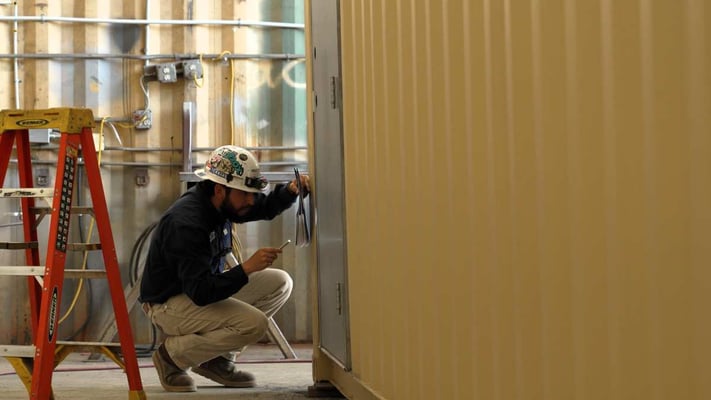
A modified shipping container structure typically lasts 25 years or more. Three things contribute to its lifespan: the climate it sits in, how much life the container had left when it was modified, and how well it's maintained. Of the three, maintenance is the one you have the most control over, and it's mostly a once-a-year job.
Containers were built to cross oceans loaded with cargo, stacked nine high, exposed to salt spray and heavy wind. Life on a job site is usually easier than that. Steel giving out doesn’t typically shorten a container’s life span. Instead, it’s small problems like standing water, a failing seal, or a rust spot that’s been ignored for years.
What affects a shipping container's lifespan?
How long do shipping containers last at sea vs. on land?
In ocean service, containers usually work for about 10 to 15 years before they're retired from shipping. That's a hard life: salt water, heavy stacking loads, and rough handling at every port.
Once a container is modified into a structure and set on land, the punishment drops. It isn't carrying cargo or getting swung around by port cranes anymore. That's why a modified container can keep working for 25 years or more, often well past its time at sea.
The steel itself is a big part of it. Containers are built from corten steel, which forms a protective layer that slows corrosion. For more on what goes into a container, see what shipping containers are made of.
What does a long lifespan mean for cost?
A structure that lasts 25 years costs very little per year of use, especially compared with a rental that bills every month or a trailer that wears out after a few moves.
It also changes what happens when a project ends. A container structure doesn't have to be scrapped or returned. It can:
- Move to the next site. Containers were built to be lifted and shipped, so relocation doesn't wear them down. Plan for the cost of the move, not a shorter life.
- Expand. Add containers side by side or stacked when the need grows, instead of replacing what you have.
- Take on a new job. A field office can become storage. A break room can become a training space. The shell outlasts the original use.
For the full math on owning versus renting, see our total cost of ownership guide.
Signs your container needs maintenance
1. Doors are hard to open or close
It’s usually one of two things. Either the hinges and locking bars need lubrication, or the container has settled out of level. Containers set on bare or uneven ground are the most likely to shift.
To check, look at all four corners. Each corner casting should sit level with the others and in contact with its support, and the floor cross members underneath shouldn't touch the ground. If something is off, block the corners with concrete pad blocks or railroad ties to level it and create clearance. If it keeps happening, look at a gravel pad, piers, or a foundation.
2. Rust patches on the roof or walls
Corten steel resists corrosion, but it isn't immune. Check the roof first, since dents there can hold water. Clean light rust with a commercial wetting agent, mild bleach, or an anti-mildew solution, a hose, and a stiff broom. Then repaint the container to seal the steel again.
3. Musty smells inside
That's a moisture problem, which means ventilation or HVAC. Replace filters on schedule. For PTAC units, have a technician clean the evaporator coil, clear the drain line, and check for duct leaks. Catching this early protects the interior finishes as well as the steel.
Annual shipping container maintenance checklist
- Inspect the roof for dents and debris. Seal major dents with caulk or a similar sealant so they don't hold water.
- Check caulking and weather stripping on doors and windows. Replace anything cracked or loose.
- Confirm the container is level. Some settling is normal; re-level if doors start to bind.
- Inspect the paint. Treat and repaint rust patches.
- Replace HVAC filters and schedule service if the unit is running hard or smells off.
Frequently asked questions
How long do shipping containers last?
A modified shipping container structure typically lasts 25 years or more. How long yours lasts depends on the climate it sits in, how much life the container had left when it was modified, and how well it is maintained.
How long do shipping containers last at sea?
Most containers stay in ocean service for roughly 10 to 15 years before they are retired from shipping. A one-trip container that’s been modified and placed on land faces far less punishment than salt spray, stacking loads, and port handling.
Does moving a container structure shorten its lifespan?
No. Containers were built to be lifted, stacked, and shipped, so relocation doesn't wear them down the way it wears down a trailer frame.
How do you make a shipping container last longer?
Keep it level and free of standing water, inspect the roof and paint once a year, touch up rust before it spreads, replace door and window seals as they wear, and keep the HVAC maintained so moisture doesn't build up inside.
What are the signs a shipping container needs maintenance?
Doors that stick or won't latch, rust patches on the roof or walls, and musty smells inside. Each one points to a specific fix: re-leveling, rust treatment and paint, or ventilation and HVAC service.
What happens to a container structure when you no longer need it?
It can be moved to another site, repurposed for a different use, or resold. Because the steel shell outlasts most projects, the structure usually has working life left when the original job ends.
Build a structure that's made to last
Falcon modifies containers into offices, bathrooms, locker rooms, and equipment enclosures built for years of hard use. Tell us what the structure has to do and where it's going, and we'll configure it from layouts that have already proven themselves in the field.
Get a quote, call 512-231-1010, or email Sales@FalconStructures.com.
SUBSCRIBE
- Shipping Container Modifications
- How-Tos
- Workspace
- Commercial Construction
- Multi-Container Buildings
- Storage Solutions
- Industrial Enclosures
- Bathrooms & Locker Rooms
- Oil & Gas
- Industry Insight
- Climate Control
- Green Building
- Living Space
- Military & Training Facilities
- Water Treatment Solutions
- Energy


THINK INSIDE THE BOX®
WITH OUR BLOG
Get everything from shipping container basics, to detailed how-tos and industry news in our weekly blog. Stay inspired and subscribe!
RELATED BLOGS
Extend the Life of Your Modified Container with These 3 Simple Repairs
Marissa Morin | Dec 23, 2020 | 3 min read
READ MORE
How To Move a Shipping Container
Marissa Morin | Aug 18, 2021 | 4 min read
READ MORE
Steel Frames vs. Wood Frames: Pros, Cons, & Shipping Containers
Marissa Morin | Feb 10, 2021 | 3 min read
READ MORE