
Total Cost of Ownership for Portable Jobsite Structures
Most portable structure decisions start with a price. But that’s not the number that causes problems later — it’s the numbers you may not find on the quote that can lead to surprises down the line.
The site prep that ran long. The permit that took 12 weeks instead of two. The HVAC that had to work harder than anyone planned for. The move to site two that wasn’t scoped. The resale market that didn’t materialize.
This page is about what it actually costs to own or rent a portable jobsite structure — from the day it shows up to the day it leaves your books. We wrote it so you can read it before you decide. Not after.
It’s More Than a Purchase Decision. It Has to Hold Up — for Years
A portable structure sticks around longer than most teams plan for. What starts as a six-month jobsite stay turns into three years. A unit meant for one project moves to a second. A rental extends twice and becomes, in practice, a purchase — only nobody decided to buy it, and there’s no structure to show for the money.
The cheapest option at the quote stage can turn out to be the most expensive by the time the asset is retired. The right option at the quote stage still looks right four jobsites later.
That’s what total cost of ownership is for. It’s a way to sanity-check that the decision in front of you holds up across the life of the asset.
In This Guide
-
What we mean by total cost of ownership
-
Why the quoted price never tells the whole story
-
How cost behaves differently across three lifecycle stages
-
Capital budget vs. operating budget, and why it shapes what you buy
-
Renting vs. owning — honest tradeoffs
-
How Falcon thinks about this
-
Field notes: deeper reads before you decide
-
FAQs
Here's is a list of states with official modular building programs and their primary oversight agencies. In states that do not have a modular building program, the project must go through the local building department.
Model Your Portable Workspace TCO
See how timeline, redeployment, maintenance, and finance assumptions change the real cost of your portable workspace.
- Compare scenarios that point to rental vs. purchase
- Surface hidden cost drivers that deserve consideration
- Generate a finance-ready summary
What We Mean by Total Cost of Ownership
Total cost of ownership — TCO, if you like acronyms — is the full number. Not what the quote says. The full number, across everything the structure does for you, from the day it lands at your site to the day you let it go.
That includes:
- Getting it there and set up — delivery, site prep, permits, utilities, customization
- Keeping it running — maintenance, repairs, downtime, insurance
- Moving or reconfiguring it when the project changes
- What it's worth when you’re done with it
Miss any of those, and your number is fiction.
Why the Quoted Price Can’t Tell the Whole Story
A quote answers one question: What does this cost to build and deliver to a staging point?
It doesn’t tell you what it costs to put into service at your site, under your conditions, on your timeline. It doesn’t tell you what it costs to keep running five years in. It doesn’t tell you what you’ll recover — if anything — when you’re done with it.
Those costs are real. In most cases, they’re predictable. The mistake isn’t missing them. The mistake is committing before anyone puts them on paper.
A quote is a snapshot. TCO is the shape of the cost over the life of the asset. Those are not the same picture, and people who treat them as the same picture tend to have uncomfortable conversations later.
How Cost Behaves Differently Across 3 Lifecycle Stages
Most teams evaluate portable structures as a one-number decision. That works until the structure is actually doing its job — at which point costs start landing in three very different phases:
-
1
Acquisition and deployment
What it takes to get the thing in service
-
2
Operation
What it costs to run, year over year
-
3
Exit and lifecycle
What it costs to move, redeploy, or retire
Each phase hides a different set of variables. A structure that looks cheap in phase one can be expensive in phase two. One that’s expensive to acquire can pay for itself across multiple moves. Until you’ve looked at all three, you’re guessing.
Each phase has its own field note. Send the relevant one to the colleague who owns that phase:
Capital Budget vs. Operating Budget: Why the Question Shapes What You Buy (or Rent)
Here’s a part of the decision most buyers don’t walk in thinking about: Which bucket of money is paying for this?
Renting pays out of the operating budget (OpEx). It’s the money you already have approval to spend on running the business. It moves fast. The monthly number is predictable. Nobody has to sit through a capital review.
Owning pays out of the capital budget (CapEx). That money typically requires a different level of approval, usually with a longer review. In exchange, you get an asset on your books — one that can be redeployed across projects, may qualify for accelerated depreciation, and has a residual value when you’re done with it.
Which bucket you draw from isn’t a financial detail. It shapes what you buy, how long you use it, and how success is measured.
Quick note: Portable structures used for business purposes often qualify for accelerated depreciation — 5-year MACRS for certain container-based structures, 7-year MACRS for certain trailer-based structures. Section 179 or bonus depreciation may also apply. Always confirm tax treatment with a qualified advisor.
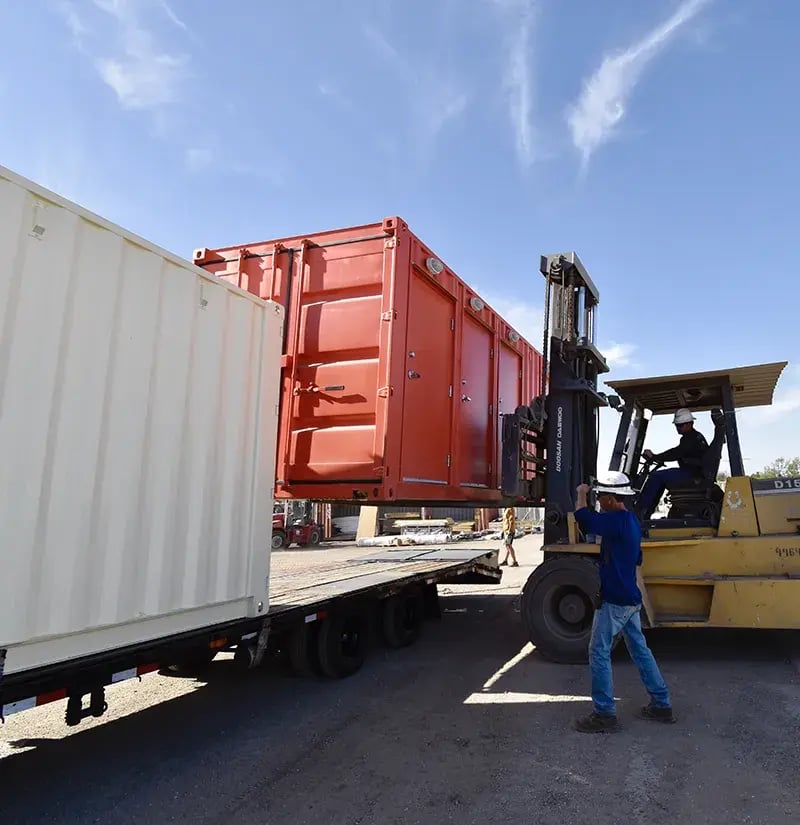
Renting vs. Owning: Honest Tradeoffs
There’s no universal answer here. Anyone who gives you one isn’t being straight with you.
- The project has a firm end date
- Preserving capital is an actual priority, not a default
- Administrative simplicity has operational value for your team
- There’s no realistic plan to use the structure again after this project
Owning tends to be the right call when:
- The structure will move across multiple projects or sites
- Redeployment is part of the operating plan, not an exception
- Long-term cost control matters more than short-term flexibility
- Durability and resale value get to compound
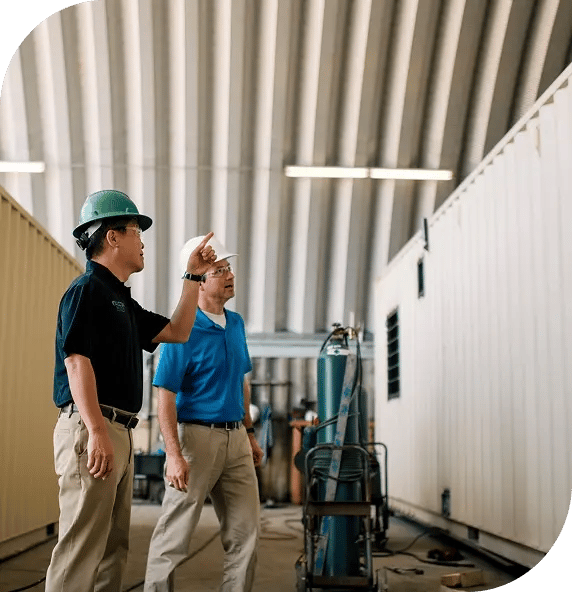
One distinction worth keeping clear: People rent for good reasons and bad ones. “We’re preserving capital for higher-value investments” is a strategy. “Rental is cheaper” — over long durations, usually isn’t. Conflating those two is how organizations end up in multi-year rental arrangements nobody intended to be in.
How Falcon Thinks About Total Cost of Ownership
Falcon builds container-based structures that are engineered to be redeployed. We’ve watched a lot of projects play out, and in many of them, ownership turns out to be more durable over time.
But not every project calls for ownership, and we’re not going to pretend otherwise.
What matters is that you understand the shape of the cost before you commit. Which numbers are likely to change over time. Which tradeoffs are in the picture. And whether the reasoning behind your choice will hold up when someone asks about it two years from now.
Field Notes: Deeper Reads Before You Decide
Frequently Asked Questions
What is the total cost of ownership for a portable jobsite structure?
TCO is the full cost of deploying, running, moving, and eventually retiring the structure — not just the quoted purchase or rental price. It includes delivery, site prep, utilities, permitting, maintenance, insurance, redeployment, and whatever residual value remains at the end.
Does residual value really belong in the analysis from the start?
Yes. What the structure is worth when you’re done with it directly reduces your total net cost. A meaningful shift in residual value can change the annualized cost picture, the rent-versus-own comparison, and the break-even timeline on a capital investment. Leaving it for the closeout conversation is how organizations end up surprised by their own math.
Who underestimates deployment cost the most?
It’s rarely any one person’s fault. Procurement focuses on unit price. Operations focuses on whether the structure is usable. Finance tracks capital against an approved number. No single person consistently carries the full lifecycle view at decision time — and that gap is where underestimation lives. Reviewing a guide like this with the relevant colleagues is how the full picture can come together.
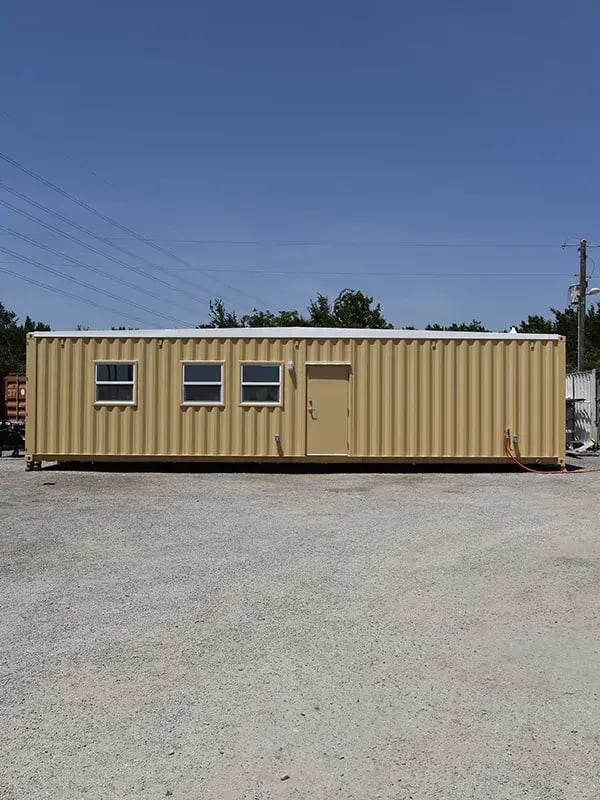
Download the Free TCO Checklist
Use this comprehensive checklist to surface the hidden variables in your acquisition, operation, and exit phases before you commit.
Next Step:
Model Your Scenario
Explore how the variables interact for your unique timeline and constraints using our TCO modeling and decision-making tool. You can:
- Compare use case scenarios
- Surface hidden cost considerations
- Create an internal-ready summary to get clarity for finance