



 Becca Hubert | Jun 3, 2026
Quick answer: Stacking shipping containers safely requires starting with structurally sound, preferably one-trip containers, adding proper structural reinforcements before stacking, using a crane attached to the corner castings, securing units together with twist locks, and limiting height based on your building's engineering plan. For commercial or multi-story builds, always involve container-experienced engineers from the start.
Stacking shipping containers is one of the most versatile techniques in modular construction — it's how a single-story job site office becomes a two-story command center, or how a handful of containers becomes a multi-unit workforce housing complex. But stacking modified containers is meaningfully different from how containers are stacked on cargo ships. The structural demands, safety requirements, and planning considerations change significantly when people will be living or working inside.
At Falcon Structures, we've designed and built stacked container projects ranging from simple two-high field offices to complex multi-container commercial buildings. Here's what every project manager, facilities director, or developer needs to understand before stacking containers on their site.
What to Plan Before Containers Arrive on Site
Front-load the engineering work — stacking decisions made late are expensive to fix.
The most costly mistakes in stacked container projects happen because structural and design decisions get deferred. By the time containers arrive on site, the window to make changes within budget has closed.
Two things to lock in early:
1. Use one-trip or low-use containers. Stacked structures bear significantly more load than a single ground-level unit. Containers with extensive wear, dents, or compromised corner castings are not good candidates for stacking. One-trip containers — those that have made a single ocean crossing — offer the most structural integrity as a starting point.
2. Plan structural reinforcements before modification begins. When containers are modified (doors cut, walls opened, windows added), the steel that was removed was carrying load. That load has to go somewhere, which means adding structural framing — headers, columns, and supplemental steel — to compensate. For stacked buildings, this isn't optional. Work with container-experienced engineers who understand how modifications affect the load path through the structure.
How to Lift and Stack Shipping Containers
A crane attached to the corner castings is the safest and most efficient method.
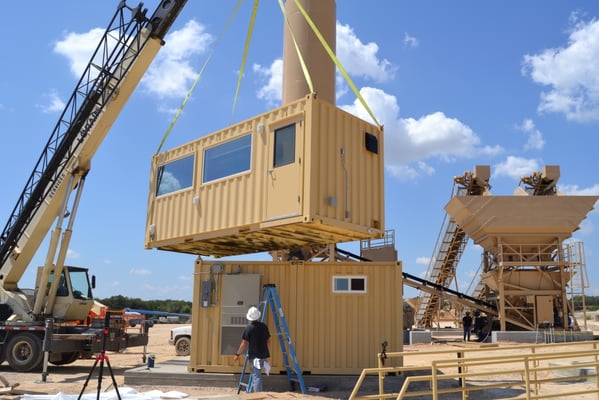
Shipping containers are engineered with corner castings — heavy steel fittings at all eight corners — specifically designed for crane lifting on cargo vessels. These same castings are used when stacking modified containers on a build site.
The stacking process typically works like this:
- A crane attaches to the four top corner castings of the container being lifted
- Crew members on the ground or on the lower container guide the crane operator as the container descends
- The container is lowered precisely onto the unit below, aligning corner casting to corner casting
- Twist locks are engaged to secure the connection (more on this below)
An industrial forklift rated for at least 15,000 lbs with forks at least 96 inches long can substitute for a crane in some situations — but this approach is slower, requires a highly experienced operator familiar with containers, and offers less precision during placement. For most stacked builds, a crane is the right tool.
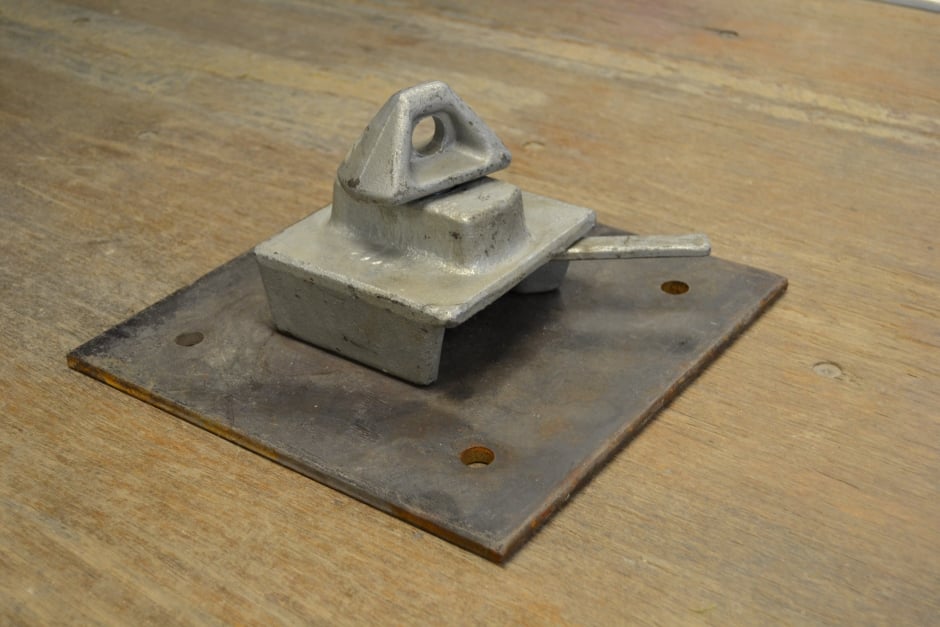
Twist locks secure shipping containers at the corner castings, clamping containers together for transit.
How Shipping Containers Lock Together When Stacked
Twist locks at the corner castings are what keep stacked containers from shifting.
As each container is set in place, twist locks — mechanical fittings that engage the corner castings of the upper and lower container simultaneously — are installed to secure the connection. Once engaged, twist locks prevent lateral movement between stacked units, keeping the structure stable under load, wind, and normal use.
For containers set on a foundation, modified twist locks or anchor bolts are used to connect the bottom container to the concrete, adding a fixed base to the whole assembly. This matters especially in high-wind regions or for taller stacked configurations.
The alignment step is critical: if the corner castings don't align precisely, twist locks won't engage properly, and the connection won't be secure. This is why experienced crew members guide the crane operator during placement rather than relying on the operator's sight lines alone.
How High Can You Stack Shipping Containers?
It depends on the building design — not just the containers themselves.
At sea, cargo containers are routinely stacked nine or more units high. For modified structures with people inside, the calculus is different.
For most practical applications:
- Two to three containers high is appropriate for standalone field offices, workforce housing units, and commercial structures without complex engineering. This is the most common range for modified container buildings.
- Beyond three stories requires comprehensive structural engineering, wind load analysis, and in most jurisdictions, permitting that treats the structure as a permanent building. The containers themselves may need additional internal steel framing to handle the compressive load from the units above.
Wind is the variable most often underestimated on taller stacked builds. A container at height presents a significant surface area to lateral wind loads — and those forces are transferred down through every connection point in the stack. Engineering those connections correctly is not something to leave to chance.
If you're envisioning a larger, taller, or more architecturally complex stacked container building, the earlier you bring in experienced engineers, the more options you'll have.
The Role of a Professional Container Modifier
Stacking shipping containers isn't something most general contractors or construction crews have experience with. The combination of crane coordination, structural reinforcement planning, twist lock installation, and foundation anchoring requires people who've done it before.
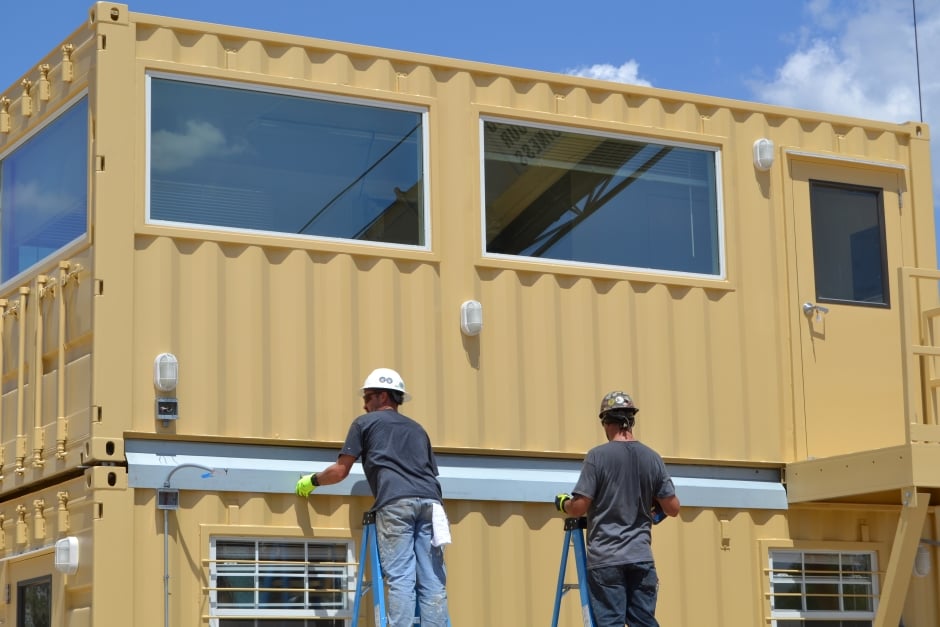
Falcon Structures has designed and built stacked container projects for clients across oil and gas, aerospace, construction, government, and commercial industries. We've built two-story field command centers, multi-unit workforce housing complexes, and custom commercial buildings — and we handle everything from structural engineering coordination to delivery and container setting.
Working with a qualified modifier means the structural work is done before containers reach your site, the stacking crew knows what they're doing, and your project doesn't stall because a connection detail wasn't thought through in advance.
Thinking about a stacked container building for your site? Get a project quote → or call us at 512-231-1010 to talk through your requirements.
Frequently Asked Questions About Stacking Shipping Containers
How do you stack shipping containers safely?
Safe stacking requires structurally sound containers (ideally one-trip units), proper structural reinforcement of any openings cut during modification, crane placement using the corner castings, and twist locks to secure each container to the one below. For commercial or multi-story structures, an engineer experienced with container buildings should be involved from the design phase.
How many shipping containers can you stack?
At sea, containers are stacked up to nine or more high. For modified structures with occupants, two to three stories is the practical range for most builds. Going higher requires comprehensive structural engineering, wind load analysis, and typically formal permitting.
What are twist locks on shipping containers?
Twist locks are mechanical connectors that fit into the corner castings of stacked containers and engage both the upper and lower unit simultaneously. They prevent lateral movement between stacked containers, keeping the structure stable. Modified twist locks or anchor bolts are also used to secure the bottom container to a foundation.
Do you need a crane to stack shipping containers?
A crane is the safest and most efficient method. It attaches to the four top corner castings of the container being lifted and allows precise placement with crew guidance. A heavy-duty forklift (15,000+ lb capacity, 96"+ forks) can be used as an alternative, but it's slower and requires an operator with specific container experience.
What type of containers should be used for stacked buildings?
One-trip containers — those that have made a single ocean crossing — are strongly preferred for stacked structures. They have the most structural integrity and the least wear on corner castings and framing. Heavily used containers with significant dents or damaged corner castings are poor candidates for load-bearing applications in a stacked build.
Do stacked shipping container buildings require permits?
In most jurisdictions, yes — particularly for structures intended for occupancy. The permitting requirements depend on the number of stories, intended use, and local building codes. Falcon's team can assist with permitting coordination as part of the project process. Learn more about container permitting services →



RELATED BLOGS
How to Secure a Shipping Container: Peace of Mind with Container Lock Systems
Marissa Morin | Apr 6, 2022 | 3 min read
READ MORE
7 Shipping Container Maintenance Steps to Help You Prep for Winter
Marissa Morin | Jan 6, 2021 | 2 min read
READ MORE
Infographic: Fascinating Facts about Shipping Containers
Paige Welsh | Nov 21, 2017 | 1 min read
READ MORE