

 Becca Hubert | Dec 3, 2025
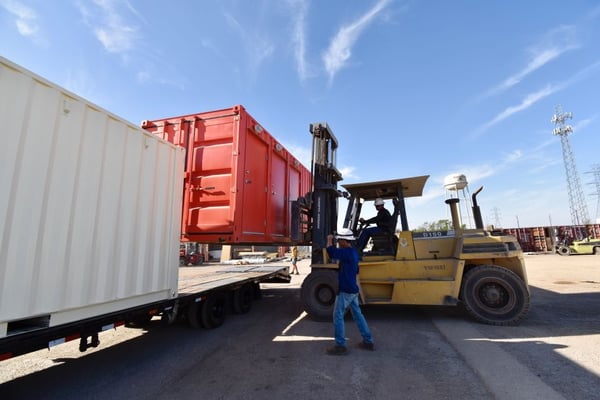
2025 was a defining year for modular construction, especially for small-footprint, container-based solutions. At Falcon, we saw shifts in customer priorities, permitting expectations, and onsite realities that reflect where we think the industry is headed next. Here are the five trends that shaped this year, and what we think they mean for 2026.
1. Small-Footprint Modular Construction Is Thriving
Demand surged for right-sized, easily portable structures. Falcon’s throughput climbed steadily throughout 2025, a testament not only to our team’s skill but to the market’s growing appetite for our specialty: small-footprint modular spaces that can be shipped, set, and put to work quickly.
From our vantage point, the marketing is clearly saying bigger isn’t better, but efficiency is.
Attendees of UT Austin’s Industrialized Housing Summit toured Falcon’s facility to learn more about small-footprint modular construction.
What This Means for 2026:
We expect organizations to double down on compact, strategic modular builds. As the modular industry leans into where it truly shines—creating usable space where traditional construction is too slow, too costly, or simply not feasible—speed, scalability, and footprint efficiency will continue to drive purchasing decisions across industrial, infrastructure, and emerging tech sectors.
2. Workforce Well-Being Became a Business Strategy
Worker well-being became a stronger business imperative in 2025. Across industries, we saw superintendents, PMs, and EHS leaders actively seeking climate-controlled break areas, private offices, hybrid spaces, and quiet zones because the link between comfort, productivity, and retention became impossible to ignore.
Here at Falcon, we pushed the conversation around worker well-being as much as we could. CEO and Co-Founder Stephen Shang wrote articles for Industrial Safety & Hygiene News as well as Construction Executive, in which he laid out a clear case for jobsite environments directly shaping worker performance, safety, and loyalty. Our guide to employee advocacy and internal trainings helped reframe facilities as not just overhead, but as a lever for operational success. More than any other year, our customers saw treating people well as an ROI strategy.
What This Means for 2026:
We expect more intentional investment in worker-centric spaces: climate-controlled break areas, upgraded offices, and hybrid workspace/storage units. Organizations will increasingly factor worker satisfaction and comfort into ROI models, and forward-thinking employers will use better facilities as a recruiting and retention differentiator.
3. The Rise of Technology Enclosures
Electric vehicles, always-on connectivity, and the mind-bogglingly rapid adoption of AI reshaped the demand for specialized enclosures this year. We saw this firsthand through projects like:
NexE’s EV charging enclosures – Complex, custom-built, and portable to support EV fleet charging at scale.
Alaska-bound communication enclosures – Compact 10 and 20-foot containers will bring internet connectivity to indigenous communities in remote Alaska, in places where traditional constructions imply isn’t feasible.
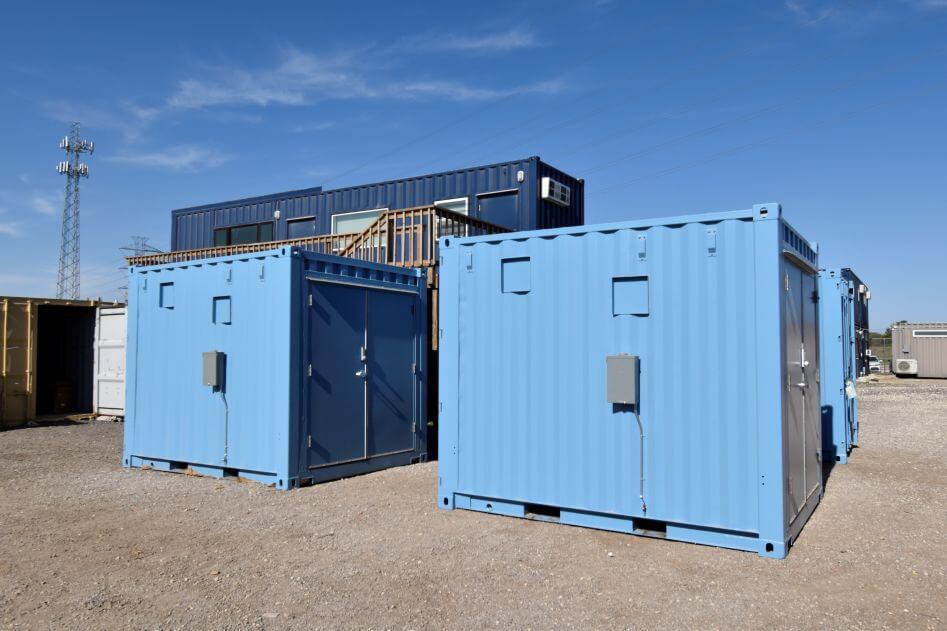
A major driver of this shift is the surge in data center growth, particularly in our home state of Texas. While hyperscale data centers are usually built via traditional construction, their rapid expansion has created new needs for supporting infrastructure around them. Think portable connectivity units, enclosures for temperature-sensitive electrical equipment, or fast-deploy technical shelters.
What This Means for 2026:
Expect continued growth in specialized, tech-forward enclosures. As AI workloads increase and data centers expand, organizations will need supporting micro-infrastructure: portable shelters for electrical systems, telecom racks, microgrid components, and backup power. Modular won’t replace data centers, but it will increasingly power the ecosystem around them, with major opportunities in utilities, fleet electrification, remote connectivity, and industrial tech.
4. Permitting & Code Complexity Became a Pain Point
Even with progress in modular code adoption, confusion increased in 2025, especially around container-based structures. Customers turned to Falcon not just for the product, but for permitting guidance, engineer-stamped drawings, state inspections, and compliance support.
While the industry has matured, many vendors still cut corners, leaving customers exposed.
What This Means for 2026:
Customers will gravitate toward engineering-first modular providers who don’t skip steps. Fly-by-night operators will face increasing scrutiny. Full-service support, including permitting, inspections, and compliance, will become a customer expectation.
5. The Shift from Renting to Owning Accelerated
Rental trailers became a sore spot for many construction and industrial customers in 2025. We heard repeatedly, including from teams like Jordan Foster Construction, that rental prices, surprise maintenance fees, and lack of customization were killing budgets.
Owning modular assets emerged as the smarter play. Companies want structures they can customize once, deploy for years, and treat as capital equipment rather than temporary overhead.
What This Means for 2026:
More companies will treat modular spaces as long-term infrastructure investments. The “buy once, benefit for years” mindset will continue to grow, especially for jobsite offices, hybrid workspaces, storage/office combinations, and technical enclosures.
Where Modular Is Headed Next
2025 showed that modular construction isn’t just adapting to change, it’s driving it. From small-footprint efficiency and worker-first design to the rise of tech enclosures and full-service compliance support, the industry is at an important crossroads of growth. The companies that embraced portable, flexible, and smarter infrastructure are already better positioned for what comes next.
Want more insights like this?
Follow our LinkedIn newsletter for modular trends, project takeaways, and practical guidance to navigate 2026 and beyond.



RELATED BLOGS
How to Keep Modular Multi-Story Buildings Mobile
Paige Welsh | Mar 20, 2019 | 2 min read
READ MORE
4 Structures that Should Be Replaced by Modified Shipping Containers
Stephen Shang | Apr 19, 2021 | 3 min read
READ MORE
Building Better Workdays: Small-Footprint Modular Solutions for Harsh Jobsite Conditions
Stephen Shang | Apr 2, 2025 | 4 min read
READ MORE